






Drama
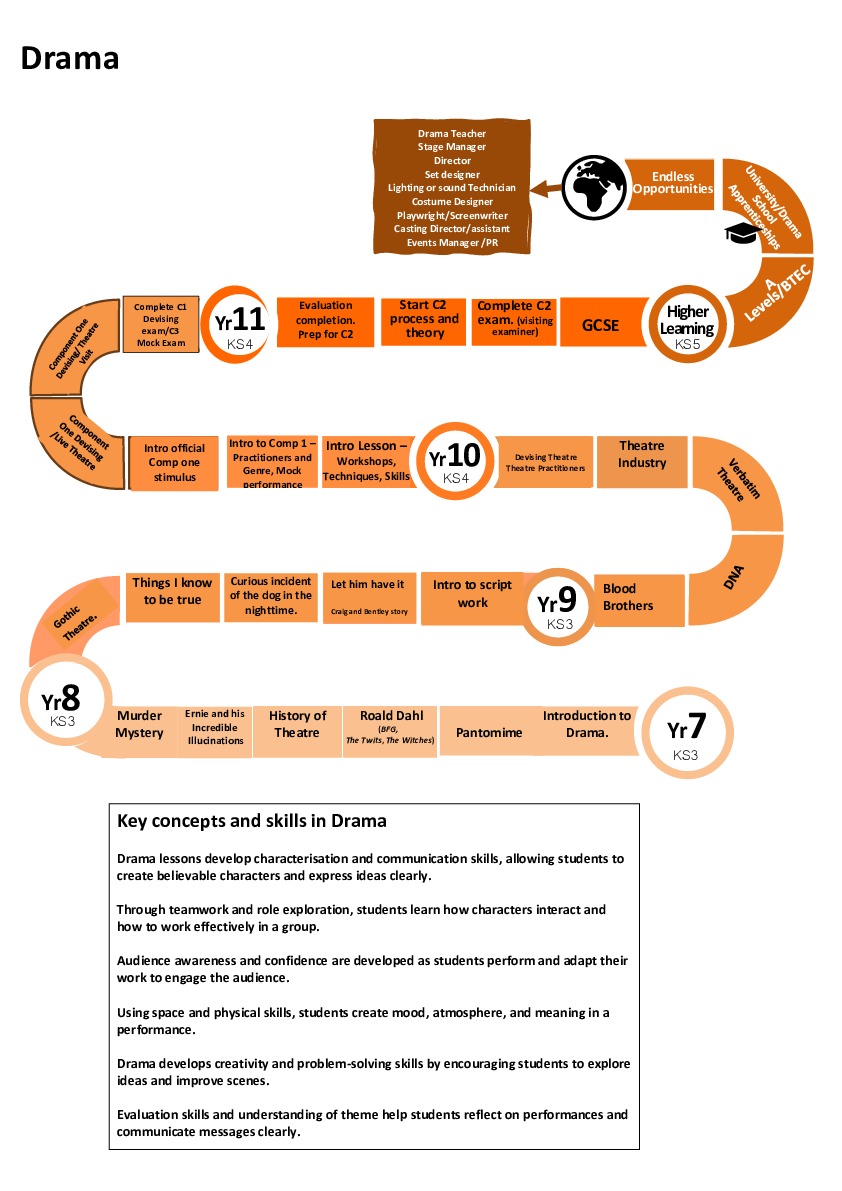
At HARI, Drama encourages students to express themselves with honesty, creativity, and confidence. Through collaborative projects and hands-on exploration, pupils develop essential skills in communication and teamwork while gaining an understanding of theatre’s evolution—from its earliest forms to contemporary performance. Our curriculum exposes students to a wide range of plays, styles, and techniques, broadening their perspectives and enhancing their ability to interpret and create meaningful work. By engaging with diverse stories and taking on roles such as performer, director, and designer, students cultivate confidence, empathy, and resilience. Studying Drama not only equips learners with valuable life skills but also prepares them for further study, performance opportunities, and effective collaboration in any future career path.
Throughout Key Stage 3, pupils are introduced to a wide range of plays from both modern and historical authors, providing them with a well-rounded understanding of how theatre originated and how it has evolved over time. They also explore a variety of skills and techniques, enabling them to express themselves, engage with unfamiliar stories and situations, and broaden their awareness of the world around them. Studying Drama helps pupils understand the connection between theatre’s historical roots and the performances they watch and create today.
During the KS3 Drama curriculum, pupils study scripts from William Shakespeare and work with a variety of engaging stimuli. Through these activities, they encounter diverse styles, skills, and themes—including comedy, tragedy, and mythology. A key focus throughout the curriculum is collaboration: pupils learn to work effectively with others and take on different roles, such as performer, director, and designer.
By the end of KS3, pupils will have developed strong collaborative skills and a deeper appreciation of theatre’s history and genres. They will be well-prepared for GCSE Drama should they choose to continue, and they will also gain essential life skills that support confidence, teamwork, and social interaction.
GCSE Drama is a dynamic and practical course that combines performance, creativity and critical thinking. It offers students the chance to explore how drama is created, performed and interpreted, developing both practical and analytical skills that are invaluable on stage, in further study, and in a wide range of future pathways.
Three main components make up the course:
1. Understanding Drama (40%) – Written Exam
Students study one set play from the AQA list and build their knowledge of drama and theatre. The examination (1 hour 45 minutes, open book) assesses:
-
Knowledge and understanding of drama and theatre.
-
How meaning is created in performance texts, including social, cultural and historical context.
-
Analysis and evaluation of a live theatre production they have seen.
2. Devising Drama (40%) – Practical Coursework
Students work collaboratively to create and develop their own original drama. They document their creative process in a Devising Log and perform their devised piece. Pupils may choose to contribute as a performer or as a designer (in areas such as lighting, sound, set, costume or puppets).
3. Texts in Practice (20%) – Practical Performance
Students perform two extracts from a chosen play (different from the set play studied for the written exam). These performances showcase their ability to interpret and realise theatrical intentions in performance or design.